Gwyneth Paltrow’s lifestyle brand GOOP has waded deep into the homeware waters with the launch of its first furniture line, a collaboration with Crate & Barrel’s diffusion line, CB2.
The line – everything from lounge and dining room sets, to crockery and glassware – appears perfectly suited to GOOP’s demographic: extremely rich ladies with access to excellent stain removers.
“Our goal,” said Paltrow on her website, “was to make it easy for anyone to achieve a cohesive, curated look for their space.”
That is, of course, provided that their “space” has room for a small laundry basket with a recommended retail price of $400. There’s also a $350 floor pillow (which is a totally different beast to an ordinary bed pillow, and anyone who disagrees should be jailed).
And for those who enjoy watching the servants work, there is a gorgeous leather tote for firewood, replete with large handles to carry it to and from the woodpile – all for the bargain price of $737.
But the cherry, or rather – the activated almond – on the flourless carrot cake would be the mid-century style lounge, which comes in light grey and pale pink, and is obviously suited to any couple with small children who are not yet toilet-trained.
Goop's mid-century style lounge. Goop’s mid-century style lounge. Photo: CB2
    No, seriously, Paltrow’s aim was to appeal to people with kids. “…We designed a collection that (we believe) meets the needs of modern families.” Well, there is an indoor swing chair in there, going for just under $2000. It’s the perfect place for your little princess to hide when she returns home from transcendental meditation camp.
    However, there are a few pieces in the collection with kinder price points. That plush lounge has a price tag of just under $3000. The glassware, too, is well priced, with white wine stems coming in at under $20. The crockery – which features a quaint bird motif – wouldn’t look out of place in David Jones.
    It’s almost obscenely tasteful, with a colour pallet that ranges from white all the way to snow, with pops of cream in between. Paltrow believes it is “an eclectic mix” and hopes people will pick and choose the pieces they want, which might explain what a white peacock is doing, sitting on the edge of a credenza.
    The indoor swing chair, retailing for $1,920. The indoor swing chair, retailing for $1920. Photo: CB2
    But in the end, no-one will know for sure that you got it from GOOP, which might defeat the purpose.
    So if you’re after something that screams, “I spent way too much on this and I have zero regrets”, you might be interested to learn that DJ Khaled, American music producer and radio personality, has also launched his own luxury furniture line. Based on items in his own home, and called, somewhat unsurprisingly, “We the Best Home”, the collection features a lot of gold and will be sold through a Miami store before going national.
    Like Paltrow, DJ Khaled has designed his line with families in mind. “I wanted to create something that highlighted how important our homes are to our lives – it’s where we spend time with family. It’s where we make memories. It’s where we raise our children.”
    Of course, in his own home Khaled has a throne prominently on display, so his top priority was another, in red and black velvet, standing at 194 centimetres, complete with lion insignia, for just over $4000. Khaled calls it a “must-have”.
    The royal theme continues throughout, with an end-table made of glass, and held up by a gold lion ($600) a gold tub chair ($2000), and a gold and bronze stool, replete with etched lion heads (a relative bargain at $300 each).
    The Dreams Unlocked Bed, retailing for $1,199. The Dreams Unlocked Bed, retailing for $1,199. Photo: We The Best Home
    For contrast, he has included some black leather here and there on the furniture. The rugs, walls, and other finishings are all red velvet.
    It’s as if an Egyptian pharaoh travelled through time, consulted with Donatella Versace, stopped by a yum cha restaurant and promptly vomited everywhere.
    Gwyneth Paltrow launches ‘eclectic’ homeware line with $350 floor pillows

    A former Victorian principal ran his school as a “personal fiefdom” by employing relatives and using “public funds as he saw fit”, a scathing Ombudsman’s report has found.
    Following a lengthy investigation, Ombudsman Deborah Glass has concluded Ernest Fleming abused his position as principal of Bendigo South East College by hiring and promoting his wife and son.
    She also confirmed Mr Fleming engaged a bus co-ordinator who was a manager of Bendigo Coachlines, a company co-owned by another son.
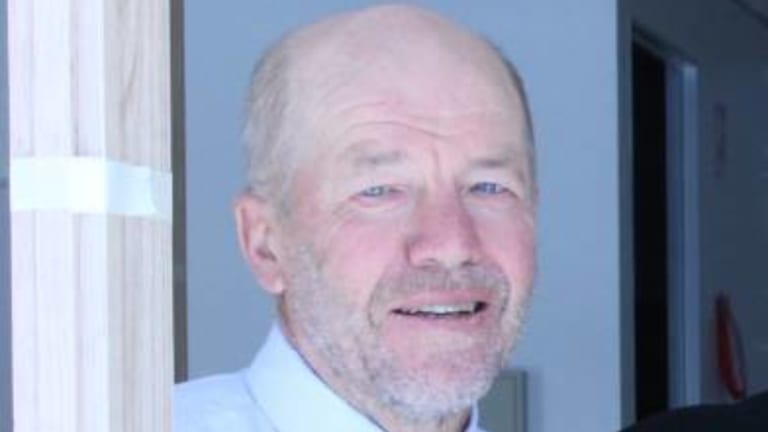
    Former Bendigo South East College principal Ernest Fleming.
    Former Bendigo South East College principal Ernest Fleming.
    Photo: Supplied
    This business received work from the school at the expense of other local bus companies.
    “If a case study into nepotism is needed, this is it,” Ms Glass wrote in the damning 129-page report, published on Tuesday.
    “For many years, Ernest Fleming ran the college as a personal fiefdom, employing and promoting family members, providing substantial benefits to his son’s business partner and companies owned by his son, and using public funds as he saw fit without consultation or approval from the college council.”
    Mr Fleming denies having used his position for personal gain and says clearances were received in regard to potential conflicts of interest.
    The Education Department’s regional office was inundated with more than 20 complaints about the principal’s behaviour between August 2014 and February 2016 but failed to “meaningfully investigate" them, the report said.
    According to the Ombudsman, this allowed Mr Fleming to “continue to engage in improper conduct with impunity”.
    Mr Fleming resigned in May – almost 18 months after being temporarily stood down by the department.
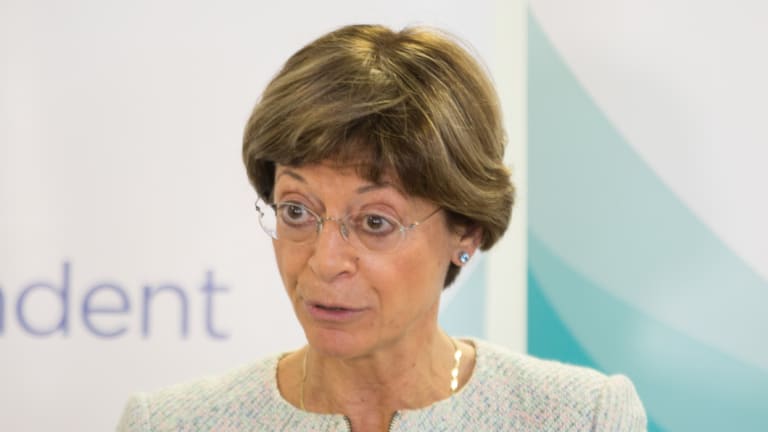
    Ombudswoman Deborah Glass.
    Ombudswoman Deborah Glass.
    Photo: Simon Schluter

    Ms Glass said Mr Fleming's conduct ''impacted the culture of the college and the careers of numerous past and current teachers and staff. Nepotism is particularly pernicious in rural and regional areas with fewer job opportunities.”
    Mr Fleming employed his son Adam as a consultant before appointing him manager of the college’s specialist sports program in December 2014. His son received the sought-after job over a more qualified candidate, the report said.
    Six weeks after Adam began the role in the sports program, his father had given him a backdated promotion that increased his annual salary by $7,203.
    The investigation also found Mr Fleming’s wife was promoted to the role of his personal assistant despite there being no evidence she submitted a valid application.
    In 2013, Mr Fleming engaged Michael Bulmer as the school's regional bus co-ordinator – a role which involved booking buses for students – despite knowing he had a conflict of interest as a manager at Bendigo Coachlines. In 2016, Mr Fleming's son became a co-owner of the business, which was still used for students.
    On Wednesday, Mr Fleming's lawyer attacked the Omdudsman's report.
    “The Ombudsman’s office has demonstrated its partisan approach to the inquiry by issuing a public statement using sensational language to attract media attention to its release,” David Schier said.
    “It claimed that Mr Fleming ran the college as his 'personal fiefdom' and then wholly failed to show, in its lengthy document where Mr Fleming benefited personally, financially or otherwise from the allegations so made.
    “There is not one finding, despite a two-year investigation and two audits ordered by the department, that Mr Fleming received the benefit of one dollar. The report entirely clears him of some of the main but now entirely discredited allegations that were made by the early anonymous complainants.”
    Mr Schier said the Education Department had failed Mr Fleming and college staff over many years in its governance of conflicts of interest and associated complaints.
    “Mr Fleming has claimed throughout that he made full disclosure to senior officers of the department of conflict of interest issues and received the appropriate clearances,” he said.
    An earlier independent report prepared for the department had found Mr Fleming was open in dealings with staff and family members and ''there was nothing insidious in relation to conflict of interest”, Mr Fleming said.
    An Education Department spokesman said it welcomed the report and had taken steps to address issues at the school.
    "Since these issues occurred, the department has undertaken an extensive integrity reform agenda, which has addressed many of the issues raised in this report," he said.
    With Bendigo Advertiser

    Case study in nepotism': principal ran school as own fiefdom, says report

    Elon Musk is the 31st richest person in the world

    (Bloomberg) - Elon Musk raised his fortune by $ 1.4 billion on Tuesday (7) with a single tweet.
    Tesla shares jumped 11 percent to $ 379.57 in New York, bringing Musk's fortune to $ 25.8 billion after he said he was considering closing the capital of the maker of electric vehicles $ 420 a share.
    His message came minutes after the Financial Times reported that the Saudi Arabian Public Investment Fund had accumulated an undisclosed 3 percent to 5 percent stake this year, according to unidentified people with direct knowledge of the issue.
    Musk said in the tweet that he secured the funding, without giving details. A price of $ 420 per share would rate the company at $ 82 billion, including debt. Even though it is the 31st richest person in the world and Tesla's largest shareholder, Musk would rely on external financing for the possible purchase, considering his wealth is highly illiquid.
    The CEO told employees that shareholders would have the final say if he decided to go ahead with the idea of ​​closing the company's capital.
    About half of Musk's $ 26 billion fortune is held through its stake in Space Exploration Technologies, which the billionaire has promised to keep private until it starts conducting regular missions to Mars, which would happen in years.
    His $ 13bn stake in Tesla would likely be injected into privately-held company. Musk, 47, has already committed a portion of its stake in Tesla's common stock to secure bank loans, according to the June 2018 market announcement.
    A buyout at $ 420 per share would probably not allow Musk to reap any benefits from the $ 2.6 billion stock option grant it received this year. At this price, the stock value alone stands at $ 72 billion, below the initial performance target of $ 100 billion. That means the titles would be lost.
    (With the collaboration of Dana Hull)

    Musk needs just 61 characters to enrich $ 1.4 billion

    Inter-American Development Bank accompanies events in the country, which affected its management and led to the withdrawal of personnel from the office of Managua


     Nicaragua: IDB management can suspend disbursements to borrowing country (Jorge Cabrera / Reuters)
    Protests against the government that have shaken Nicaragua since April and whose violent crackdown has generated international criticism have affected the work of the Inter-American Development Bank (IDB) in the country, but its leadership has not yet considered suspending loan disbursements, the agency said. Tuesday (7).
    The IDB follows "closely" events in Nicaragua that have affected its management on the ground and led to the removal of non-essential personnel from the Managua office for security reasons, a spokesman told AFP.
    "The crisis has affected the preparation and execution of projects and disbursements of IDB loans in the country. Our active portfolio of investment loans in Nicaragua has a disbursing balance of $ 624 million, "he explained.
    The IDB's board of directors, where the 48 member states are represented, may suspend disbursements to a borrowing country, such as Nicaragua, but did not do so.
    "To date, this alternative has not been discussed by our management," says the spokesman.
    "We remain vigilant in deliberations on Nicaragua in the Organization of American States (OAS) and we support the calls of the international community for a peaceful resolution of the political conflict in this member country of the IDB," he added.

    Crisis in Nicaragua affected IDB projects and disbursements

    The new government's estimates have been reduced and indicate that Italy will grow 1.2% this year and between 1% and 1.1% in 2019


     Italy: With the reduction of economic growth, a bigger deficit for next year of 1.2% is expected (Getty Images / Getty Images)
    Rome - Italian Economy Minister Giovanni Tria said on Wednesday that the country's economic growth is expected to decline until next year but that the government will remain faithful to its fiscal commitments.
    The new government estimates the country will grow 1.2% this year and between 1% and 1.1% next year, Tria said, according to the Italian daily Il Sole 24 Ore, below the government's most recent forecast. 1.5% this year and 1.4% in 2019.
    This would translate into a larger deficit for the next year of 1.2%, compared to the previous estimate of 0.8%.
    In addition, it would also slow the pace at which Italy planned to reduce its huge debt. The previous government, led by Paolo Gentiloni, predicted a reduction of public debt to 122% of Gross Domestic Product (GDP) in 2021, from 131.8% in 2017.
    "What counts is the way down [to debt], which is not under discussion," he told the Il Sole 24 Ore newspaper, adding that the entire government agrees to respect the financial constraints imposed by the European Union.

    Italy reduces growth estimate for 2018 and 2019

    Imports fell 20.6% compared to July 2017, due to the accumulation of inventories in preparation for US tariffs


     China imported 8.01 million tonnes of soybeans in July (Dan Koeck / Reuters)
    BEIJING (Reuters) - Chinese imports of soybeans fell in July from June, customs data showed on Wednesday, with processors slowing purchases after mounting record inventories in preparation for heavy US import tariffs in the month past.
    China, the world's largest soybean buyer, imported 8.01 million tonnes of soybeans in July, down 8 percent from June's 8.70 million tonnes, according to data from the country's General Customs Administration .
    Imports fell 20.6 percent from the record volume of 10 million tonnes in July 2017.
    "Chinese buyers bought a lot of Brazilian soybeans to avoid the impact of the Sino-US trade war ... The pressure on domestic stocks is high, so imports from July have dropped a bit," said Tian Hao, senior analyst at First Futures.
    Beijing imposed a 25 percent tariff on a list of US products totaling $ 34 billion, including soybeans, on July 6 in response to US actions on similar Chinese goods.
    Chinese companies have been big buyers of Brazilian grains in recent months, in anticipation of Beijing's imposition of tariffs.
    Large arrivals of the oilseed led the country to register record stocks of soybean meal and put the crushing margins into negative territory.
    China imported 52.88 million tons of soybeans in the first seven months of the year, down 3.7 percent year-on-year.
    "Imports in August and September are expected to be around 8 million tonnes as well. Inventories will remain at high levels, "said Tian.
    China's soybean meal stocks hit a record 1.27 million tonnes in early July.
    China, which imports 60 percent of the soybean traded in the world, bought 32.9 million tonnes from the United States in 2017, accounting for 34 percent of total purchases.

    China's soybean import falls after stockpiling before tariff

    MRV Engineering founder Rubens Menin won the World Entrepreneur Of The Year 2018, which brought together leaders from more than 50 countries


     For the first time, a Brazilian was considered the entrepreneur of the year in the world.
    Rubens Menin, founder of MRV Engenharia, is also the first South American to receive the honors, the World Entrepreneur Of The Year 2018.
    The event has been organized since 2001 by Ernst & Young - one of the largest consulting firms in the world. In June this year, it brought together men and women from more than 50 countries who, through their commitment, strategic vision and innovative energy, help transform the reality of their markets.
    Elected as entrepreneurs of the year in their respective countries, participants were evaluated by an independent panel of judges, who selected the best among the best. Menin's announcement of victory was made by Mark Weinberger, Global CEO of EY. Before the election, all the entrepreneurs were honored for their trajectory and the transforming power of their businesses.Four decades of history
    Ahead of MRV Engenharia, Menin believes in the positive impact that civil construction and access to housing have on social development.
    Its history began in the late 1970s with the recognition that home ownership was an unattainable dream for the largest portion of the Brazilian population.
    On a plot in Belo Horizonte (MG), Menin, newly formed and with the help of his parents and two cousins, built his first popular house. Today, one in every 200 Brazilians lives in a property built by MRV.


    "I'm very proud," Menin said in his speech of appreciation as he stepped onto the stage with a Brazilian flag in his hands. "The most important thing about these beautiful days that I spent here were the entrepreneurs I met. All companies here want to change the world. And we are able to do that, "he said.Focus on essence
    The awards took place on the last day of the event and crowned an extensive agenda of lectures and debates. The meeting of world leaders, who have the opportunity to interact, exchange experiences and communicate their trajectory to journalists from different countries, is one of the great benefits of World Entrepreneur Of The Year.
    "The global stage brings together a very select group of entrepreneurs from dozens of countries. Interacting with this group over several days already represents a prize, "comments Leonardo Donato, strategic market partner for South America EY.
    "This year, we were awarded the prize of a Brazilian. Proof that Brazil is capable of generating entrepreneurs of global influence. The story of MRV, which has already enabled thousands of Brazilians to realize their dream of home ownership, is very impressive, "says the executive.
    In addition to Menin, four other entrepreneurs from South America were present. Humberto Enrique Rodríguez from the Sala Group, a company that uses innovative technology for the removal of industrial waste, promotion of basic sanitation and the collection of waste was indicated in Colombia.
    Also participating in the meeting were the Chilean José Rosenberg, who founded Colchones Rosen, leader in the manufacture of mattresses in Latin America, and two Argentines: Nicolas Szekasy and Hernan Kazah, from Kaszek Ventures, an investment fund with 50 companies in the portfolio.
    "The Brazilian edition of the Entrepreneur of the Year award is quite mature," says Donato. "In October of this year, will be held the 22nd edition. Our main objective is to recognize and stimulate entrepreneurship actions that have a great impact on the community, as they bring direct benefits to their region. "
    The Entrepreneur of the Year was created in 1986 by the EY office of Milwaukee, United States. With the success of the event, EY offices in the UK, Canada and Australia have launched similar initiatives. In Brazil, the Entrepreneur of the Year has been held since 1998. In 2001, the World Entrepreneur Of The Year was created, the international stage of the award.

    Brazilian is named Entrepreneur of the Global Year

    US sanctions were intended to penalize China but intensified the devaluation of the yuan, which registered the lowest price in months against the dollar


     Trump accuses China of unfair competition and technology theft (Rawpixel / Thinkstock)
    China posted a higher-than-expected increase in exports in July and its trade surplus with the United States fell slightly, two signs that Washington's tariffs on Chinese products have had a limited impact so far.
    The Asian country last month recorded a surplus of $ 28.09 billion in trade with the United States, well ahead of a record $ 28.9 billion (revised) figure set in June, according to the country's Customs.
    The colossal surplus, which increased by 11% compared to July 2017, "will not help to calm the escalation of tension between the two powers in the midst of the commercial war," says ANZ's Betty Wang.
    These are the first figures on trade between the two countries since Washington began applying, in early July, tariffs of 25% on $ 34 billion in imported Chinese goods.
    US President Donald Trump, who accuses China of unfair competition and theft of technology, hopes in this way to curb the imbalance of bilateral trade. Beijing responded with import tariffs of the same value on United States products.
    "Chinese exports to the United States registered a slight slowdown, which suggests a certain impact of US tariffs," acknowledges Julian Evans-Pritchard of Capital Economics.
    "But it has little effect at the moment on the overall growth of China's foreign trade," he explains.
    With the rest of the world, China's exports rose 12.2% in July at an annual rate.
    Despite the downward trend in exports to the European Union and the United States, China's two main partners, the movement accelerated in the case of developing markets, taking advantage of the drastic devaluation of the Chinese currency.
    Irony of fate: American sanctions, which were intended to penalize Beijing, intensified the devaluation pressure of the yuan, which had the lowest price in almost a year against the dollar, which ultimately benefits Chinese exporters.
    Imports of the Asian giant rose 27.3% year-on-year last month, up from 14.1% in June. Thus, the Chinese trade balance fell in July to 28 billion dollars, against US $ 41.5 billion the previous month.
    Imports from Southeast Asia, the European Union and Australia grew 30%, 20% and 34%, respectively, "suggesting that China seeks other suppliers" outside the United States, notes Betty Wang.
    But the general opinion is one of rapid change.
    "We have not yet seen the full impact of US tariffs and we will have a better idea in August," says Iris Pang, an ING economist, quoted by Bloomberg.
    In addition, the crisis remains: Washington confirmed on Tuesday that, as of August 23, it will apply tariffs of 25% on another 16 billion dollars of imported Chinese products. Beijing promises reprisals.
    The "eye-to-eye" tariff strategy can have its limits because China imports almost four times less than it exports to the United States.

    China resists trade war in July with increased exports

    The tariffs take effect the same day that the US plans to start charging a further 25% on tariffs over $ 16 billion on Chinese products


     The number of product categories subject to tariffs has risen to 333, but the final value is the same (Jason Lee / Reuters)
    BEIJING - China will impose additional tariffs of 25 percent over $ 16 billion on imported US goods, from fuel and steel to automobiles and medical equipment, China's Ministry of Commerce said amid escalating trade disputes between the two largest economies in the world.
    The tariffs take effect Aug. 23, the ministry said on the same day that the United States plans to start charging a further 25 percent in tariffs on $ 16 billion worth of Chinese products.
    The United States has published its final list of products subject to new tariffs the day before.
    China's final list, announced on Wednesday, differs from the previous version published in June, which included crude oil. The number of product categories subject to tariffs has risen to 333 from 114 in the June version, although the final figure is the same.
    The US action that led to Chinese retaliation was the latest move by President Donald Trump to put pressure on China to negotiate trade concessions after Washington imposed tariffs on $ 34 billion worth of products last month. China has vowed to retaliate against any US lawsuit.
    "This is a pretty foolish practice," China's Ministry of Commerce said of US actions on Wednesday, while presenting China's retaliatory tariffs.
    To compensate for the space left on the list of tariffs with the exclusion of crude oil, China has added fish meals, waste wood, paper and waste, metal scrap and various types of bicycles and cars among other products.
    Last week, China proposed additional tariffs on $ 60 billion worth of US products, after Trump raised the initially planned tariffs by 10 percent over $ 200 billion in imports from China to 25 percent.
    So far, China has imposed or proposed the adoption of tariffs on 110 billion dollars in US products, representing the vast majority of American products that it imports annually. High-value US products, such as crude oil and large aircraft, are not yet on any list.
    A spokeswoman for the US Trade Representative was not immediately available to comment on China's retaliation announcement or whether it would lead to a new round of tariff threats over 200 billion Chinese products.
    The US trade representative conducts a public consultation period for fares by September 5, which may reach 25 percent. It would take a few more weeks to review the list and schedule customs changes to begin charging.

    China decides to impose additional tariffs on US $ 16 billion in US products

    Measure had been anticipated by the White House, amid the trade dispute with China, which seeks to reduce the United States trade deficit with the country
    China and the US: Washington began imposing additional tariffs on July 6 at $ 34 billion in imports from China (Jason Lee / Reuters)
    The United States will apply, as of August 23, 25% tariffs on a total of $ 50 billion of Chinese imports, in response to its "unfair trading practices," the US Commerce Department said in a statement.
    The measure had been anticipated by the White House amid a trade dispute with China that seeks to reduce the US trade deficit with the country.
    Washington began imposing additional tariffs on July 6 at $ 34 billion worth of Asian imports.
    The new provision extends the measure to an additional $ 16 billion in Chinese products.
    According to official information, 279 products will be affected in response to "unfair trade practices in China, such as forced technology transfers and intellectual property rights," the statement said.
    The list of goods on which the tariff will weigh will be published in the official bulletin.
    The Trump government accuses Beijing of "depriving US companies of the ability to exploit licenses," the ministry said.
    It also denounces "cybernetic intrusions in US commercial digital networks to gain unauthorized access to important business information."

    US will apply 25% tariffs on over $ 16 billion of Chinese products

    The sanctions are a consequence of the US withdrawal from the nuclear agreement with Iran and seeks to isolate the country economically


     WASHINGTON (Reuters) - The United States has confirmed on Monday that it will again impose the first round of sanctions on Iran and warned it would be "fully" deployed to increase economic pressure against Ayatollahs and prevent them from continuing to fund " in the region.
    "This government intends to fully comply with the sanctions and as soon as they come into force to economically pressure the Iranian regime, curb its evil activities and, finally, open a new path leading to the prosperity of the Iranian people," he said today a senior US official.
    The resumption of sanctions is a consequence of the United States withdrawing from the 2015 nuclear deal with Iran and seeks to isolate the country economically, forcing foreign companies to reduce or close their business in the country.
    The United States will again penalize trade in gold, precious metals and other materials, including aluminum and steel, will again impose sanctions on Iran's auto industry and ban transactions related to the rail system. In addition, Washington will prevent Tehran from acquiring dollars and imposing sanctions on those who buy or facilitate the issuance of Iranian money.
    These sanctions were suspended after the signing of the nuclear agreement in July 2015 by Iran and G5 + 1, consisting of Russia, China, the United Kingdom, France, Germany and the United States, then chaired by Barack Obama, one of the the initiative. In May, his successor, Donald Trump, decided to withdraw from the pact and announced the resumption of sanctions, the first part of which will enter into force in the next few hours and on November 4 will be implemented the remainder, which includes the sale of oil and financial transactions with the Central Bank of Iran.
    According to the top US official, about 100 companies have already announced their desire to leave the Iranian market, especially because of uncertainty in the energy and financial sectors. So far, the most affected are multinationals, such as Airbus, Peugeot and Siemens.
    The European Commission has taken a number of measures to protect its companies from extraterritorial sanctions in the United States, such as the so-called "blocking statute".

    US confirms sanctions against Iran and warns full deployment

    The Iranian president, who is under pressure from the economic crisis and the devaluation of the currency, should appear in plenary within a maximum of one month


     Facing the economic crisis, Rohani has changed the president of the Central Bank and plans to reshape the executive's economic team (Denis Balibouse / Reuters)
    Tehran - Iran's parliament on Wednesday convened President Hassan Rohani to respond to Members' questions about the economic problems that have once again sparked popular protest.
    Of the 290 MPs in Parliament, 92 have asked Rohani to appear, or more than one-quarter, the mayor of the Chamber, Ali Lariyani, said.
    The leader, who has been under pressure due to the economic crisis in Iran and the devaluation of the national currency, should appear in plenary within a maximum of one month.
    Rohani will be questioned about the government's failure to curb unemployment and rising prices, continued sanctions on the banking system, severe economic recession and sharply declining rial value.
    Faced with a poor economic situation and devaluation of more than 50 percent of the rial, Rohani has changed the president of the Central Bank of Iran and plans to reshape the executive's economic team.
    The crisis has generated discontent among the population, which has exploded in protests since yesterday, mainly in the city of Isfahan.
    Isfahan's chancellor Rasul Yahanguirí explained to the newspaper "Doniye Eqtesad" that the complaints are mainly due to currency fluctuations.
    Protesters are asking the authorities for measures and solutions to other problems related to taxes and payments.
    Yesterday and today protests took place in Shapur district and gathered hundreds of people, according to videos released on social networks, which also showed similar demonstrations in the city of Karaj.
    In recent months Iran has been the scene of protests and strikes from various sectors - currently for the second time there are truckers - due to the poor economic situation, which is worsening with the entry into force of the sanctions imposed by the United States between August and November.
    At the end of December last year, a wave of protests rocked most of the country's cities also motivated by rising cost of living, which led to criticism of the Islamic Republic's own system.

    Iranian parliament calls Rohani to explain economic crisis in the country

    The collection of Brazil with the payment of special participation by oil companies reached 8.2 billion reais in the second quarter, informed the ANP


    Rio de Janeiro - Brazil's revenue from the payment of special participation by oil companies, due only in fields with large production volume, reached a record 8.2 billion reais in the second quarter, the National Petroleum Agency , Natural Gas and Biofuels (ANP).

    The volume was 26 percent higher than the one registered in the period between January and March, when it had also been a record, pointed the autarchy.

    Of the resources obtained from PE, 50 percent will be distributed to the Union, 40 percent to states and 10 percent to municipalities.

    The State of Rio is the one with the highest collection, with 2.5 billion Reais, followed by São Paulo (400 million) and Espírito Santo (300 million).

    The special participation is an extraordinary financial compensation owed by oil and natural gas exploration and production concessionaires to large-volume production fields.

    Arrecadao with large fields of oil and gas beats new record

    Data on US GDP growth pointed to growth at the annualized rate of 4.1% in the second quarter of 2018


     US: Fed to meet on Tuesday and Wednesday (Carlo Allegri / Reuters)
    São Paulo - US Treasury Secretary Steven Mnuchin said on Sunday that the US economy's fastest pace of growth is sustainable and should continue for years to come.
    "I do not think this is a phenomenon of one or two years, I think we are definitely in a period of four or five years of sustainable growth of at least 3%," Fox News said in an interview.
    Last Friday (27), data on the growth of the Gross Domestic Product (GDP) of the United States were announced, which pointed to growth at the annualized rate of 4.1% in the second quarter of 2018, at the strongest pace in almost four years.
    The advance was driven by the recovery in consumer spending, exports and corporate investment.
    Economists estimate that the number of the second quarter would be a peak. In addition, they point out that the Federal Reserve has lower growth projections, both for this year and for the coming years.
    But Mnuchin said that last year the market projected a growth of 2% in 2018 and the government had already forecasted a 3% expansion. "We are starting to see projections up, our projection of 10 years is 3% and we are comfortable, we are reaching those numbers," he said.
    The US Treasury Secretary was also asked about President Donald Trump's recent inquiries into the Fed's flagrant rise in interest rates, which sounded a warning signal among observers about the independence of the central bank. For Mnuchin, Trump's statements were "only comments" indicating that the "president has a concern". According to him, the US president "absolutely" supports the Fed's independence. "We, as an administration, support the independence of the Fed, and the president has made it clear that this is the Fed's decision."
    Mnuchin said it is the Fed's responsibility to raise interest rates as the economy grows faster. "The market expects interest rates to continue to rise. The only question is how much and for how long? We think the Fed will be very careful in managing the economy, "he said.
    The Fed will meet Tuesday and Wednesday. Rates have increased twice this year in
    response to strong growth in the US economy, low unemployment and a slight rise in inflation.

    US secretary says he believes growth of 3% for 5 years

    The 20,000 requests for exemptions the Commerce Department received illustrate the chaos and uncertainty triggered by Trump's trade war.


     Steel: U.S. Steel and Nucor are two of the largest US steel producers (Domingos Peixoto / Site EXAME)
    Washington - US companies trying to get tariff exemptions on imported steel are accusing US steelmakers of spreading inaccurate and misleading information and fear that this could hurt their claims.
    NLMK USA President Robert Miller said the objections raised by US Steel and Nucor in their request for exemption are "literal untruths." According to him, the company, which imports huge steel plates from Russia, has already paid $ 80 million in taxes and will be forced out of business if it is not waived from the 25% tariff.
    U.S. Steel and Nucor are two of the largest US steel producers. "They should be ashamed of themselves," said Miller, who employs more than 1,100 people at mills in Pennsylvania and Indiana. The resentment of the executive, echoed by several other companies, is evidence of the strong reaction to how the Commerce Department is evaluating requests to avoid the duty on steel imports. They fear the agency will be influenced by opposition from U.S. Steel, Nucor and other domestic steel suppliers, who say they have been unfairly affected by a surplus of imports and support the Trump tariff.
    Miller was angered by Nucor and U.S. Steel's insistence that the steel plate that NLMK USA imports is readily available in the United States. "That's not true," he said.
    Your company is not the only one looking abroad for a product described as being consistently missing in the US. California Steel Industries, a California-based plant, has described the shortage of plaques as "acute" on the country's West Coast and has stated that its exemption request is critical to its survival.
    In its defense, U.S. Steel stated that its objections are based on detailed information on the dimensions and chemical composition of the steel included in the orders. "We read what's publicly posted and we respond," said spokeswoman Meghan Cox. Nucor did not respond to requests for comments.
    The 20,000 applications for exemption the Commerce Department received illustrate the chaos and uncertainty triggered by Trump's trade war against allies and opponents of the United States. It's a battle that critics of its trade policy, including a number of Republican lawmakers, have warned is wrong and will ultimately hurt US companies.
    Trump and European leaders agreed last Wednesday not to increase trade disputes, but tariffs on imported steel and aluminum remain in effect as the US and Europe seek a broader trade agreement.
    Metal taxes would continue to hit other US trading partners, such as Canada, Mexico and Japan, even if the US and the EU make a deal.
    Source: Associated Press

    Increased dispute between US steelmakers and steel importers

    If, in politics, Brazil has been in turmoil since the beginning of Dilma Rousseff's impeachment process at the end of 2015, and the economy continues to give encouraging signs. On the same day that the São Paulo Stock Exchange registered a new historical record of points (77,891), the Government announced another record in the trade balance. The country obtained a trade surplus of 67 billion dollars in 2017, 40.5% higher than the previous year, thanks to the increase in volume and prices of its exports, according to official data released on Tuesday.
    The result is in line with the $ 66 billion projected by the market in the weekly survey conducted by the Central Bank and within the 65-70 billion range envisaged by the Ministry of Industry, Foreign Trade and Services (Mdic).
    The trade balance for December had a surplus of US $ 4.998 billion, with a year-on-year jump of 13.2%, which contributed to leaving behind US $ 47.683 billion in 2016. "Market expectations were very high (.. .) and exports grew for the first time after five years, "said Minister Marcos Pereira of Mdic.
    The minister added that imports grew for the first time in three years due to the improvement registered by the Brazilian economy after leaving one of the worst recessions in its history. "This shows a real recovery of the economy," said Pereira.
    Positive trade balances with China and Argentina were one of the drivers of the 2017 trade balance of Latin America's largest economy.
    Overall, overseas sales totaled $ 217.7 billion in 2017, up 18.5 percent from $ 185.2 billion a year earlier, while imports amounted to $ 150.7 billion, up 10, 5% over the previous year's 137.5 billion.
    "It's good for Brazil because it guarantees the entry of dollars. We have a very good reserve mattress that can continue to increase. This allows the country's perception of risk not to change, "Raul Velloso, an economic consultant and former Secretary of Economic Affairs of the Ministry of Planning, told AFP news agency.

    China and Argentina boost Brazil's record balance of trade